A pick-and-carry crane lifts a load and drives with it to where it needs to go. That ability to travel with the load makes it ideal for deliveries, yard work and sites where a slewing crane would need several set-ups. This page explains how it works and when to choose it.
How a pick-and-carry crane works
Most mobile cranes are slewing cranes. They drive to a position, set up on outriggers to create a stable base, and then rotate the boom on a turntable to move the load. Each time the load needs to go somewhere outside the reach of that set-up, the crane has to pack up and move.
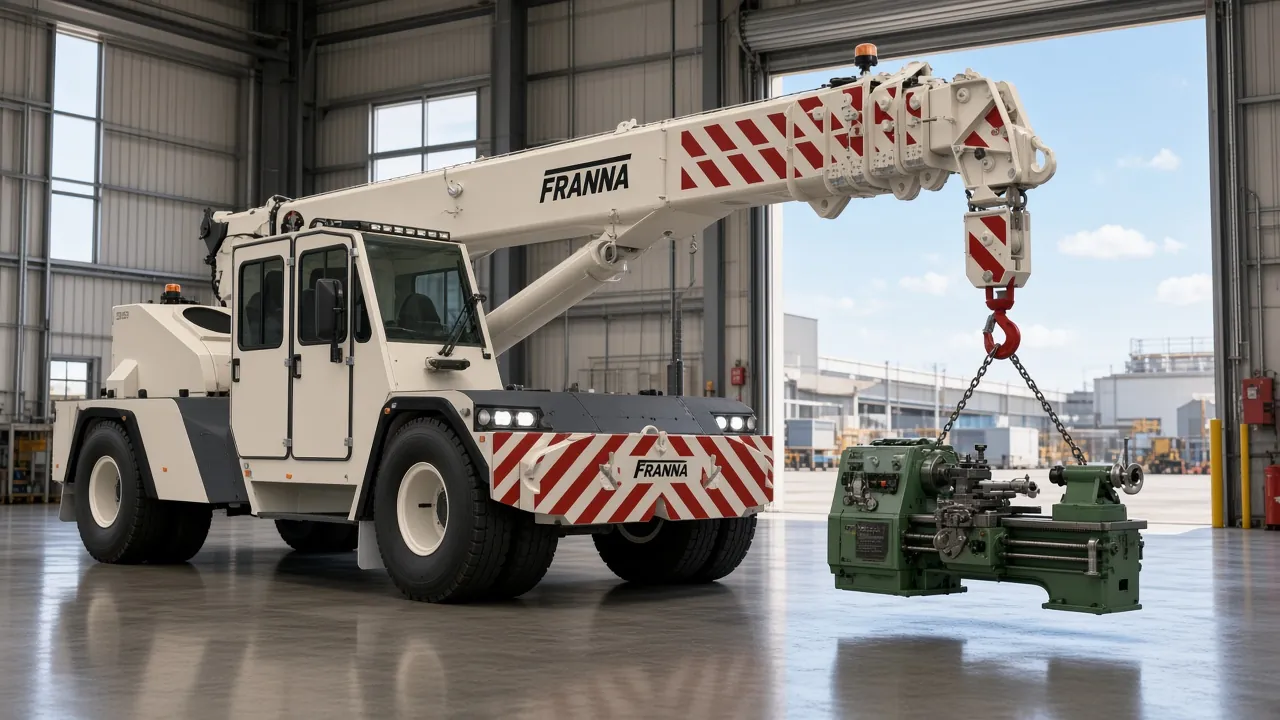
A pick-and-carry crane takes a different approach. Its boom is fixed to the front of the machine, which steers by articulating in the middle. Instead of relying on outriggers, it is designed to lift on its wheels, within a load chart that accounts for the machine being straight or turned and static or travelling. The operator lifts the load, keeps it low, and drives it to where it needs to go.
Some pick-and-carry cranes do have outriggers or stabilisers for particular configurations, but the everyday advantage is that much of the work happens without them. On a busy site, that saves time on every lift.
Pick and carry versus slewing mobile crane
- Set-up: A pick-and-carry crane can often lift on arrival. A slewing crane usually needs outriggers deployed and levelled.
- Moving the load: A pick-and-carry crane can travel with the load. A slewing crane moves the load by slewing and luffing within its set-up radius.
- Reach and height: A slewing crane of similar capacity generally reaches further and higher, which suits lifts over buildings.
- Footprint: A pick-and-carry crane's working footprint is often smaller because there are no outriggers spread out.
- Ground: A pick-and-carry crane needs a firm travel path for carrying. A slewing crane concentrates its load through outrigger pads.
Neither is better across the board. The right choice depends on the load, the distances and the site. Many projects use both at different stages.
Pick and carry versus crane truck
A crane truck, sometimes called a Hiab after a well-known brand of truck-mounted crane, combines transport and lifting in one vehicle. For a single light delivery that needs to come off the truck close to where it is going, it can be the most efficient option. For heavier loads, loads that need to travel across a site after unloading, or repeated lifts over several hours, a pick-and-carry crane usually makes more sense. See our guide to Franna or crane truck.
Jobs that suit pick and carry
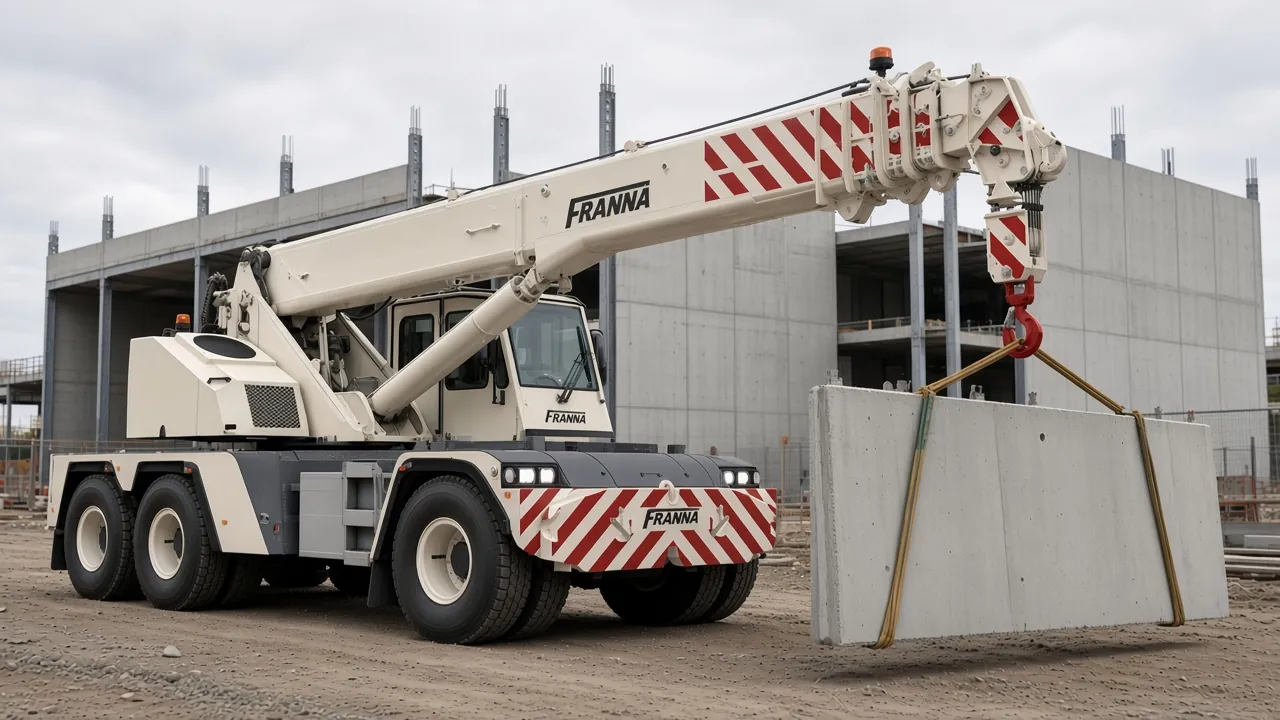
- Unloading semi-trailers of steel, precast or plant and placing it around the site
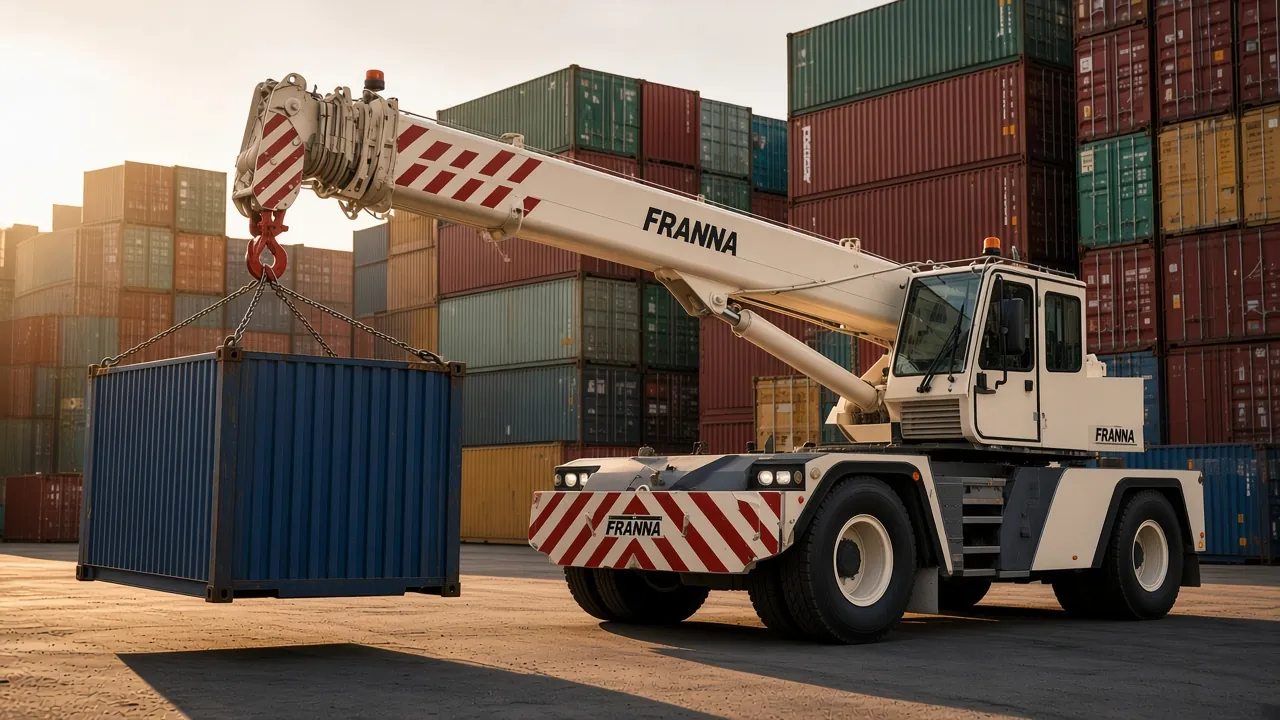
- Moving shipping containers around storage yards and properties
- Setting out precast pits, culverts and kerb units along a civil job
- Installing machinery inside factories where a slewing crane cannot fit
- Relocating site sheds and demountables as a project progresses
- Lifting boats, tanks and other one-off loads at homes and businesses
Planning a carry lift
Carrying a load adds factors that a static lift does not have. The load is moving, so it can swing. The crane is travelling, so the ground along the path matters. And the load chart for travelling with a load is more conservative than for lifting in place.
- Plan the route. Walk the path the crane will take with the load. Check for slopes, soft spots, pits, kerbs and overhead obstructions.
- Keep the load low. Loads are carried close to the ground to keep them stable and reduce the risk if anything goes wrong.
- Control the swing. Tag lines are used on many loads so a dogman can stop them turning or swinging.
- Keep people clear. The travel path becomes an exclusion area while the crane is moving with the load.
- Travel slowly. Smooth, slow movement keeps the load steady.
Ground and slope
The single biggest limitation on pick-and-carry work is the ground. Cranes are heavy, and with a load on the hook the front axle carries a lot of weight. Concrete, asphalt and well-compacted road base are ideal. Grass, fresh fill, wet ground and sand can give way, and the crane can sink or tilt.
Slope matters just as much. Carrying a load across a slope moves the centre of gravity and reduces stability. Load charts are based on level ground, and only small amounts of slope can be tolerated. If the only route is steep or soft, we will talk to you about ground mats, an alternative route, a different crane or another lifting method.
Getting a pick-and-carry crane booked
Send us the load details, the start and end points, the route between them and some photos. We will confirm whether a pick-and-carry crane is the right choice, which class suits, and send a written quote. Our Franna crane hire page covers what is included in more detail.
Franna hire questions
What is the difference between a Franna and a pick and carry crane?
Franna is a brand of pick-and-carry crane. The name is used so widely that most people use the two terms to mean the same thing.
Can a pick-and-carry crane lift without outriggers?
Yes. Pick-and-carry cranes are designed to lift on their wheels within their load chart, which is one of their main advantages.
Is pick and carry safe?
Yes, when it is planned and done within the load chart, on suitable ground, with the load kept low and the travel path controlled.
How far can a pick-and-carry crane carry a load?
There is no single limit. It depends on the ground, the slope and the route. Carrying a load across a yard or along a site is common.
Keep reading
 Franna Crane HireOperated Franna hire for building, civil, industrial and residential lifts, sized to your load and site.Read more
 Operated Crane HireEvery crane comes with a licensed and insured operator. What that covers and when extra rigging crew is needed.Read more
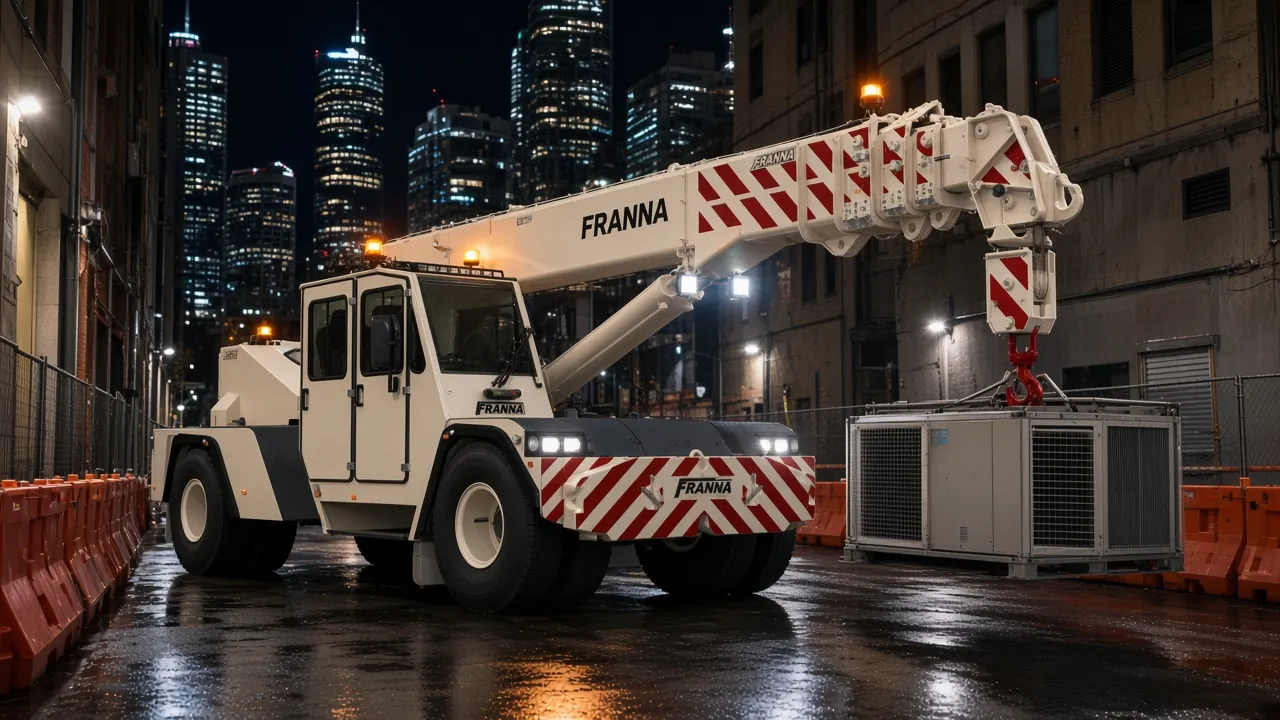 After-Hours and Weekend Crane HireNight, early-morning and weekend lifts for road closures, shutdowns and busy sites.Read more
 Tight-Access Crane LiftsNarrow driveways, backyards, laneways and factory floors where space is the main problem.Read more
Tell us what you need lifted
Send the load, its rough weight and size, the site address and the date. Photos of the load and the access help us size the right crane first time.
- Licensed and insured operators
- Day, after-hours and weekend lifts
- Brisbane, Gold Coast and Sunshine Coast
- Written quote before the job is booked
Prefer email? info@frannacranehirebrisbane.com.au
Request Received
Thanks ! Someone from Franna Crane Hire Brisbane will call you back shortly. For emergencies right now, please call us directly.
Call 07 3103 9872